Data analytics for credit unions and banks who are future-focused

Welcome to a data analytics experience where growth and ownership are encouraged. Infinite possibilities await.

What makes the Gemineye Data Lakehouse a superior choice?

Star glasses illustration in mint green.

A Supergroup of Data Engineers

Where technical expertise meets modern sensibilities.

Customization illustration

Customization-friendly

Looking for a specific customization? You got it.

illustration of sneaker hitting the ground in a mint green color.

Persistent and Proud of it

We won’t rest until we find solutions to our clients’ problems.

Hear from Our Clients

Gemineye has been a critical partner for us in the migration away from legacy data software and structure. They helped modernize our data architecture and migrate to a cloud infrastructure. It has been a game-changer!
Nolan Walker
Nolan Walker
VP of Data Analytics
Suncoast CU
$16.7B Assets
Purple quote icon
Purple quote icon
Showing Slide 1 of 2

Proud to be an official Databricks Consulting Partner

It takes a lot of work to become a Databricks Consulting Partner. As the world’s leading analytics and AI company, they take their partnerships very seriously. As part of a global group of best-in-class tech companies, our designation proves that you are in good hands when it comes to data strategy, analytics, collaborative data science, and machine learning.

A Data Analytics Partner for Financial Institutions Gemineye

A supergroup of data engineers

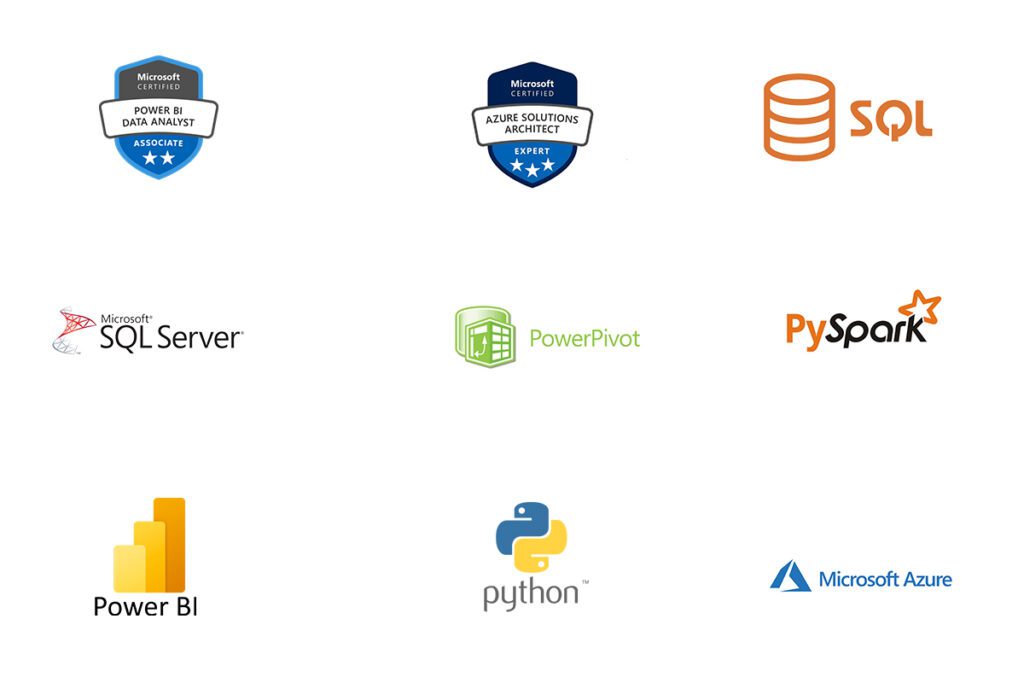
The Gemineye team consists of data and technology experts with decades of credit union and banking experience, data warehousing design, SQL and ETL development, and API development. Combined, we create a supergroup of skilled experts with modern sensibilities in the data space. Count on us to provide honest answers, recognize industry-centric trends, and act as a dependable partner in your journey.

Multiple tech logos on white background
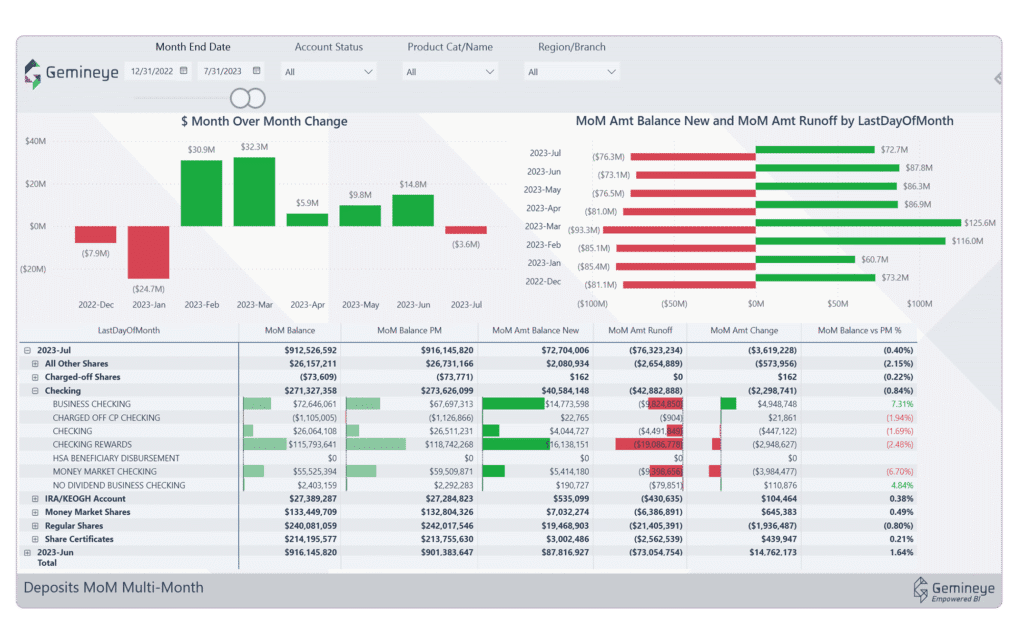
Gemineye data lakehouse month over month balances vs runoffs

Customization-friendly

Customizations are the backbone of our Gemineye Data Lakehouse product. We recognize that you need a partner who can create an environment specific to your organizational demands, and that’s why we’ve included customizations in our services – no charge. 

Persistent and proud of it

Innovators at heart, our persistence in problem-solving has made us the clear choice for financial institutions who won’t settle for second best. We pride ourselves on our ability to brainstorm, research, and carve out solutions to tough problems.

persistent

News and Resources

sailboat on water POV
Set a Course: Tracking (and Correcting) Your Data Analytics Progress in 2024

Why Data Analytics Matters Data analytics is essential for staying competitive in today’s competitive landscape. A recent study by Jack Henry found that 42% of credit unions prioritize leveraging data ...

Ann Ditlow and bento box
Ann Ditlow: Data Analyst at 4Front CU

Welcome to our very first edition of “A Day in the Life of a Data Analyst,” featuring the equally talented and down-to-earth Ann Ditlow, Data Analyst at 4Front CU. Ann ...


Get to Know Bill Butler, Sr. Power BI Developer & Consultant

Bill has a deep background in the credit union industry. Throughout his robust career in the industry, Bill has utilized technology and data with finance/accounting to help credit unions and banks ...

Showing Slide 1 of 4
mint green triangle
mint green triangle

News and Resources

What Analytics Leaders at Credit Unions and Community Banks Wish Their Executives Understood

What Analytics Leaders at Credit Unions and Community Banks Wish Their Executives Understood

Inside most credit unions and community banks, there is a quiet gap between the people who work with data every day and the executives who fund and direct the data program. Both sides want the same thing: a credit union that makes smarter, faster decisions. But they often talk past each other, and the cost of that misalignment shows up as stalled projects, frustrated teams, and analytics investments that never quite deliver what leadership hoped for. This gap is not unique to community financial institutions, but it is especially consequential for them. With lean teams and tight budgets, a credit union cannot afford to have its data function and its executive team pulling in different directions. Closing the gap starts with leadership understanding a few things that analytics teams often struggle to communicate upward. Analytics Is Not the Same as Reporting, and the Difference Matters The most common point of misalignment is definitional. To many executives, data analytics means reports: the monthly numbers, the board deck, the dashboard that shows last quarter’s performance. To the data team, that is the most basic layer of what they do. The higher-value work is predictive and prescriptive: identifying which customers are likely to leave, where loan portfolio risk is building, or which segments will respond to a campaign before the campaign runs. McKinsey has noted that a lack of executive vision for analytics often stems from leaders not grasping the difference between traditional business intelligence and advanced analytics that actually drives decisions. When executives evaluate the data team only on reporting output, they undervalue the capability that would actually move the institution forward. Analytics leaders wish their executives understood that asking the data team to spend all its time producing static reports is like hiring a financial analyst and using them only to photocopy statements. Data Quality Problems Are Business Problems, Not IT Problems When a report is late or a number looks wrong, the instinct is often to treat it as a technical hiccup for the data team to fix quietly. In reality, most of these issues trace back to upstream decisions about how data is captured, defined, and governed across the institution, and those are business decisions that require executive attention. If two departments define an active member differently, no amount of technical skill on the data team will produce a single reconciled number. The fix requires leadership to align the organization on definitions, ownership, and standards. Analytics leaders wish their executives understood that the data team cannot solve, on its own, a problem that originates in how the whole organization treats its data. Speed of Insight Depends on Investment in Infrastructure Executives often experience the symptom (it takes too long to get answers) without seeing the cause. The cause is usually that the data team is working within fragmented infrastructure: pulling from the core system, exporting to spreadsheets, reconciling by hand, and rebuilding the same logic every time a question comes up. When leadership asks why a request takes a week, the honest answer is that the underlying systems were never set up to make it fast. Analytics leaders wish their executives understood that the speed they want is purchasable, but it requires investment in the data foundation rather than pressure on the team to work faster within a broken process. The payoff is real: after putting the right foundation in place, one Gemineye client reclaimed the time their team had been spending each month assembling board reports and redirected it toward more strategic work. A Data Team That Feels Valued Is a Data Team That Stays Skilled analytical talent is hard to find and harder to keep, particularly for credit unions and community banks competing against larger institutions and tech companies for the same people. Retention is not only about compensation. McKinsey has documented how meaningful recognition from senior leadership, including direct acknowledgment from the CEO, goes a long way toward retaining analytics talent. When executives treat the data function as a cost center to be managed rather than a capability to be developed, the best people notice, and they leave. Analytics leaders wish their executives understood that how leadership talks about and invests in the data team directly affects whether that team stays intact. Losing a key data person at a lean credit union is not a minor staffing event. It can set the entire analytics program back by a year. How to Close the Gap Between Data Teams and Leadership Closing this gap is a shared responsibility, and a few practical steps make a real difference. Executives can ask the data team what they could deliver with better infrastructure, rather than only asking why current requests take so long. Data leaders can translate their work into the outcomes executives care about: loan growth, member retention, efficiency, risk reduction, rather than describing it in technical terms. And both sides benefit from a regular cadence of communication where the data team shares not just what it is working on, but the value that work is producing. The credit unions that get the most from their data are the ones where this gap is smallest. The executives understand enough about what analytics can do to ask for the right things, and the data team understands enough about the business to deliver work that matters. Neither side needs to become the other. They just need to understand each other well enough to point in the same direction. Give Your Data Team and Your Executives a Shared Foundation Much of the gap between data teams and leadership comes down to infrastructure that makes good analytics slow and hard to deliver. Gemineye’s Data Analytics platform gives credit unions and community banks the foundation to deliver fast, reliable insight, and gives executives the clear, decision-ready outputs they need, all from the same trusted source of data.

How Financial Institutions Connect Core Systems, CRM, and LOS Without Rebuilding Everything

How Financial Institutions Connect Core Systems, CRM, and LOS Without Rebuilding Everything

If you run data or analytics at a credit union or community bank, you already know the integration problem intimately. Your core banking system holds the transactional truth. Your loan origination system has the lending data. Your CRM has the member relationships. Digital banking has the engagement signals. Each one is essential, and none of them was designed to share cleanly with the others. Pulling a complete picture means bridging all of them by hand, every time. The instinct, when the pain gets bad enough, is to assume the fix requires a massive overhaul: a new core, a rebuilt data warehouse, a multi-year project that consumes the team and the budget. That assumption is what keeps a lot of financial institutions stuck. The reality is that connecting your systems does not require tearing them out. The most effective path is almost always to integrate what you have, not to rebuild it. Why Rebuilding Your Core Stack Is the Wrong First Move For a lean data team, a rip-and-replace approach to the core stack is the highest-risk, highest-cost option available, and it is rarely necessary. McKinsey’s research on bank modernization makes this point directly: leading institutions focus first on integration and then on simplification, connecting systems through proper interfaces before deciding what, if anything, needs to be replaced. The same body of research warns against needlessly ripping out and replacing legacy architectures when integration would achieve the goal at a fraction of the cost and risk. For a credit union or community bank, where the core system is deeply embedded and a migration carries real operational danger, that guidance is especially relevant. Rebuilding also solves the wrong problem. The issue is usually not that any individual system is bad at its job. The core is good at being a core. The LOS is good at originations. The problem is that they do not talk to each other. That is an integration gap, and integration gaps are solved by connecting systems, not by replacing them. What a Connected Data Environment Actually Requires Connecting a financial institution’s systems means establishing a layer that pulls data from each source, harmonizes it so the same field means the same thing everywhere, and makes it available for reporting and analysis without disturbing the underlying systems. The core keeps doing what it does. The LOS keeps originating loans. The integration layer sits above them, gathering and reconciling the data so the team is not doing that work by hand. The hard part of this is not the concept. It is the execution, specifically the connectors. Every system has its own structure, its own quirks, definitions, and its own way of exposing data, and some of the most important systems in a credit union or community bank are notoriously difficult to integrate. Building and maintaining those connections from scratch is exactly the kind of work that consumes a small data team and never quite gets finished. This is why the maturity and breadth of pre-built integrations matters more than almost any other factor when evaluating an approach. Why Pre-Built Integrations Matter More Than Custom Work There is a meaningful difference between a platform that can theoretically connect to your systems and one that already has those connections built and maintained. Custom integration work means your team, or a vendor’s, builds each connection by hand, tests it, and then maintains it indefinitely as the source systems change. Pre-built integrations mean the connection already exists, is already tested, and is kept current by someone else. For a credit union or community bank data team operating with limited headcount, this distinction is the difference between an integration project that drags on for a year and one that is largely solved on arrival. It also reduces the ongoing maintenance burden, which is the part of integration work that quietly consumes capacity long after the initial project is done. The breadth of an integration library, and crucially whether it includes the difficult, institution-specific systems, is what determines how much of the work is already handled versus how much your team will still have to do. Mobility CU integrated its collections platform with Gemineye’s Data Lakehouse and quickly surfaced opportunities to reduce repossession expenses, a direct result of connecting a system that would otherwise have sat isolated from the rest of their data. How to Evaluate an Integration Approach for Your Financial Institution When assessing how to connect your systems, a few questions cut through most of the noise. Does the approach already support your specific core, LOS, CRM, and digital banking platforms with pre-built integrations, or would those connections need to be built from scratch? Does it handle the difficult, less common systems, or only the easy ones? Does it preserve your ability to define data on your own terms, or force you to conform to a vendor’s structure? And does it provide transparency into how data moves from source to report, so your team can trust and audit the results? These questions matter because they separate an integration approach that reduces your team’s workload from one that simply relocates it. The goal is connected data that your team can rely on without becoming the permanent maintenance crew for a sprawl of custom connectors. How Gemineye Connects Your Systems Without the Overhaul Gemineye’s Data Integrations solution is built precisely for this. With more than 75 pre-built integrations, including the difficult ones that other providers will not touch, Gemineye connects core systems, consumer loan and mortgage origination, digital banking, CRM, and third-party data vendors without requiring you to rebuild any of them. Because the integrations are pre-built on a Databricks and Microsoft Power BI architecture, your team avoids the redundant build work, the long implementation timelines, and the perpetual maintenance burden that custom integration creates. The platform also preserves your control over your own data definitions and provides end-to-end data lineage and a transparent data dictionary, so your team can see exactly how every field moves from source to report. If you need your ...

The Real Cost of Disconnected Data Systems at Financial Institutions

The Real Cost of Disconnected Data Systems at Financial Institutions

Most credit union and community bank leaders know their data systems do not talk to each other as well as they should. The core banking platform sits in one place, loan origination in another, digital banking somewhere else, the CRM off to the side. Everyone knows the picture is fragmented. What is harder to see is how much that fragmentation actually costs, because the price is rarely written down anywhere. It is paid in staff hours (sometimes executive staff hours!), slow decisions, and missed opportunities that never make it onto a budget line. That hidden cost is real, it is large, and it compounds every year an institution leaves it unaddressed. Understanding where the money actually goes is the first step toward deciding whether the problem is worth solving. What Disconnected Data Systems Actually Cost a Financial Institution When systems do not connect, every question that spans more than one of them becomes a manual project. Someone has to export data from each source, reconcile the differences, and assemble a usable answer by hand. Multiply that across every report, every month, every department, and the labor cost alone is substantial. Staff who were hired to analyze, advise, and serve members instead spend large portions of their week as human integration layers, moving data between systems that should have been connected in the first place. The scale of this waste is well documented. McKinsey research on data costs found that fragmented data repositories can consume between 15 and 20 percent of the average IT budget just to store and maintain. In one case, a global bank running more than 600 separate data repositories was spending two billion dollars a year to manage them, and by consolidating and streamlining, the institution removed more than four hundred million dollars in annual data costs while improving data quality at the same time. Few credit unions or community banks operate at that scale, but the underlying dynamic is identical: fragmentation is expensive, and the expense grows with every disconnected system. The Costs That Never Show Up on a Budget Line The labor and infrastructure costs of disconnected data are the visible portion. The larger costs are the ones that never get measured. When leaders cannot get a clear, current view of the institution, decisions get delayed or made on incomplete information. A lending trend that should have been caught early goes unnoticed until it shows up in the quarterly numbers. A profitable member segment goes unrecognized because the data needed to see it lives in three systems that were never joined. There is also a trust cost. When the numbers from one system do not match the numbers from another, leadership stops fully trusting any of them. Meetings get consumed by debates over whose figures and definitions are right rather than what to do about them. This erosion of confidence is impossible to put a dollar figure on, but anyone who has sat through that meeting knows it is real, and it slows the entire institution down. Why Disconnected Systems Get More Expensive Over Time The cost of fragmented data is not static. It grows. Every new system a credit union or community bank adds, whether a new digital banking platform, a new origination tool, or a new third-party service, adds another island of information that has to be manually bridged to everything else. Each addition multiplies the number of connections that do not exist, and the manual work required to compensate increases accordingly. This is why the problem feels manageable for years and then suddenly does not. The institution grows, adds systems, takes on more members, and the manual integration burden that was once tolerable becomes a serious drag on the entire operation. The longer the underlying fragmentation goes unaddressed, the more expensive it becomes to keep working around it. What Connected Data Makes Possible When a financial institution’s systems are properly integrated, the costs described above reverse into gains. The staff hours that went into manual data assembly return to higher-value work. Decisions speed up because leaders can see a complete, current picture without waiting for someone to build it. The trust problem resolves because everyone is working from the same reconciled source, so meetings focus on action rather than on which spreadsheet is correct. Integration is not a technical nicety. It is the foundation that determines how efficiently an institution runs and how quickly it can act. For a credit union or community bank competing against larger institutions with deeper resources, the ability to see and act on its own data quickly is one of the few advantages that is genuinely within reach. How Gemineye Connects Your Institution’s Data Gemineye’s Data Integrations solution is built to eliminate the cost of disconnected systems at credit unions and community banks. With more than 75 pre-built integrations, including the difficult ones that other providers avoid, Gemineye connects the core system, digital banking, loan and mortgage origination, CRM, and third-party data vendors into one unified environment. Because the integrations are pre-built, the institution avoids the redundant work, long implementation timelines, and ongoing maintenance burden that custom integration projects create. The result is a single, trustworthy source where teams can find data independently, confident that the numbers are accurate and consistent. If your institution is paying the hidden cost of disconnected systems in staff time, slow decisions, and lost confidence, see why Gemineye’s Data Integrations solution is the leader in turning fragmentation into a connected foundation.

Showing Slide 1 of 4