
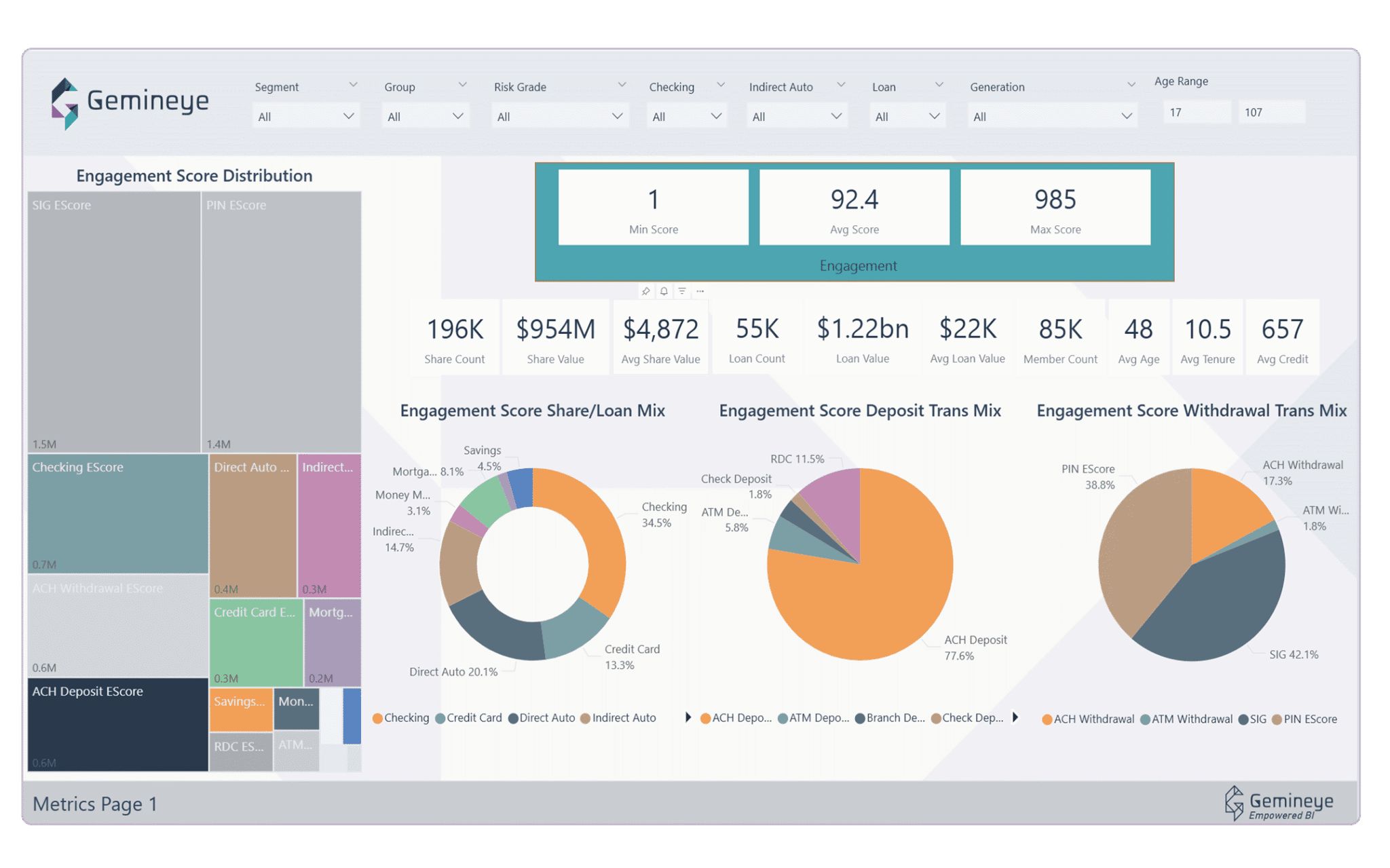
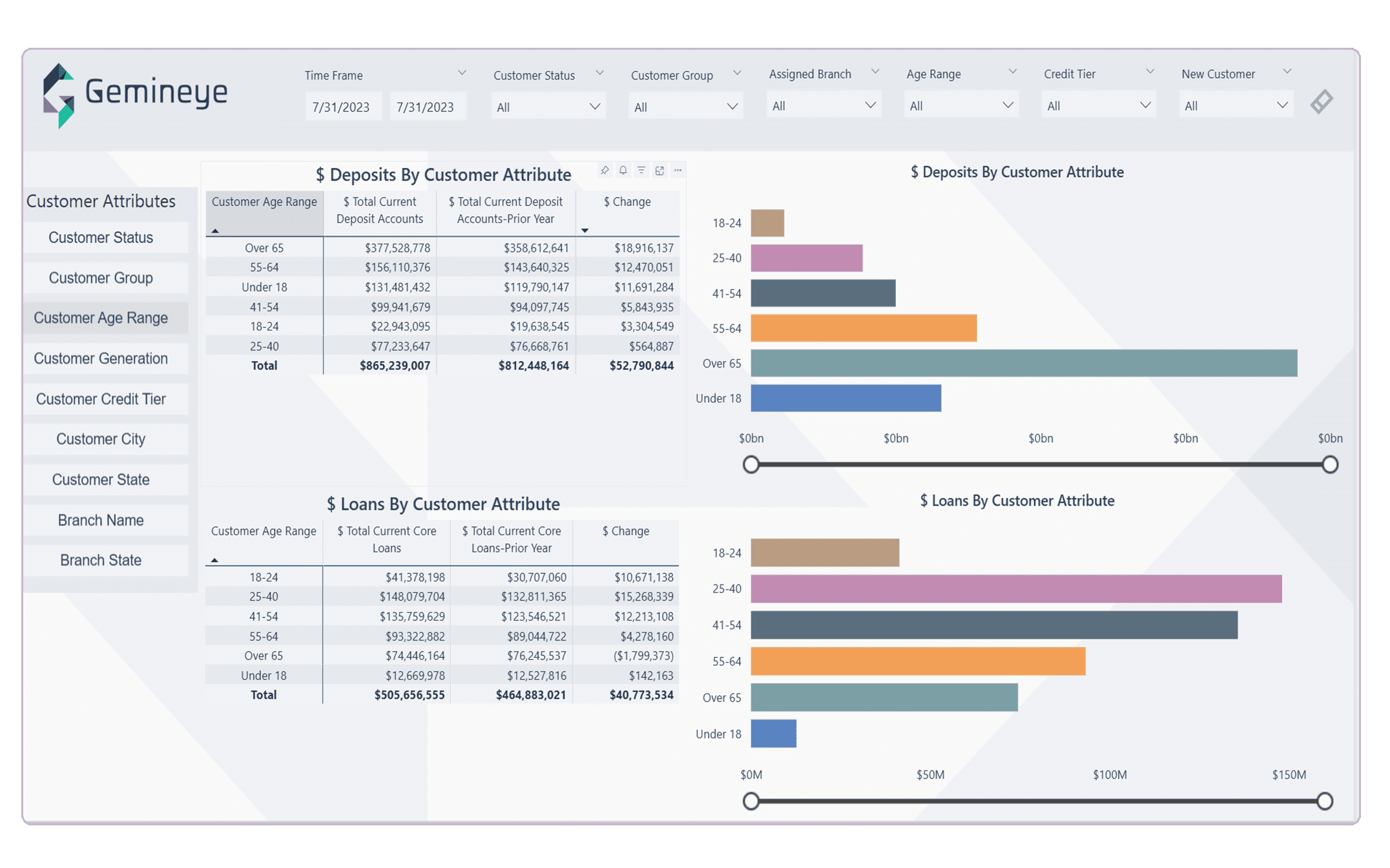
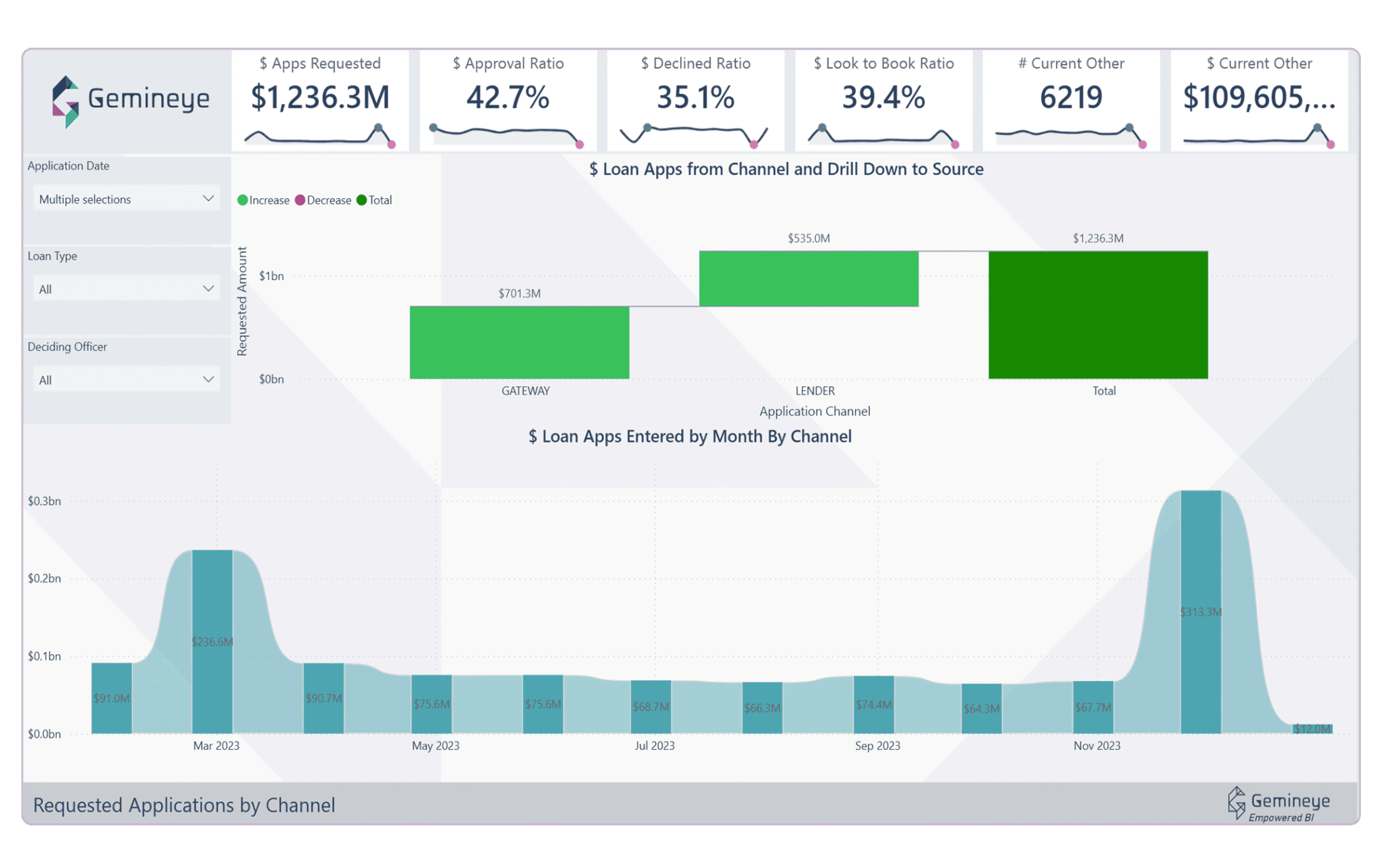
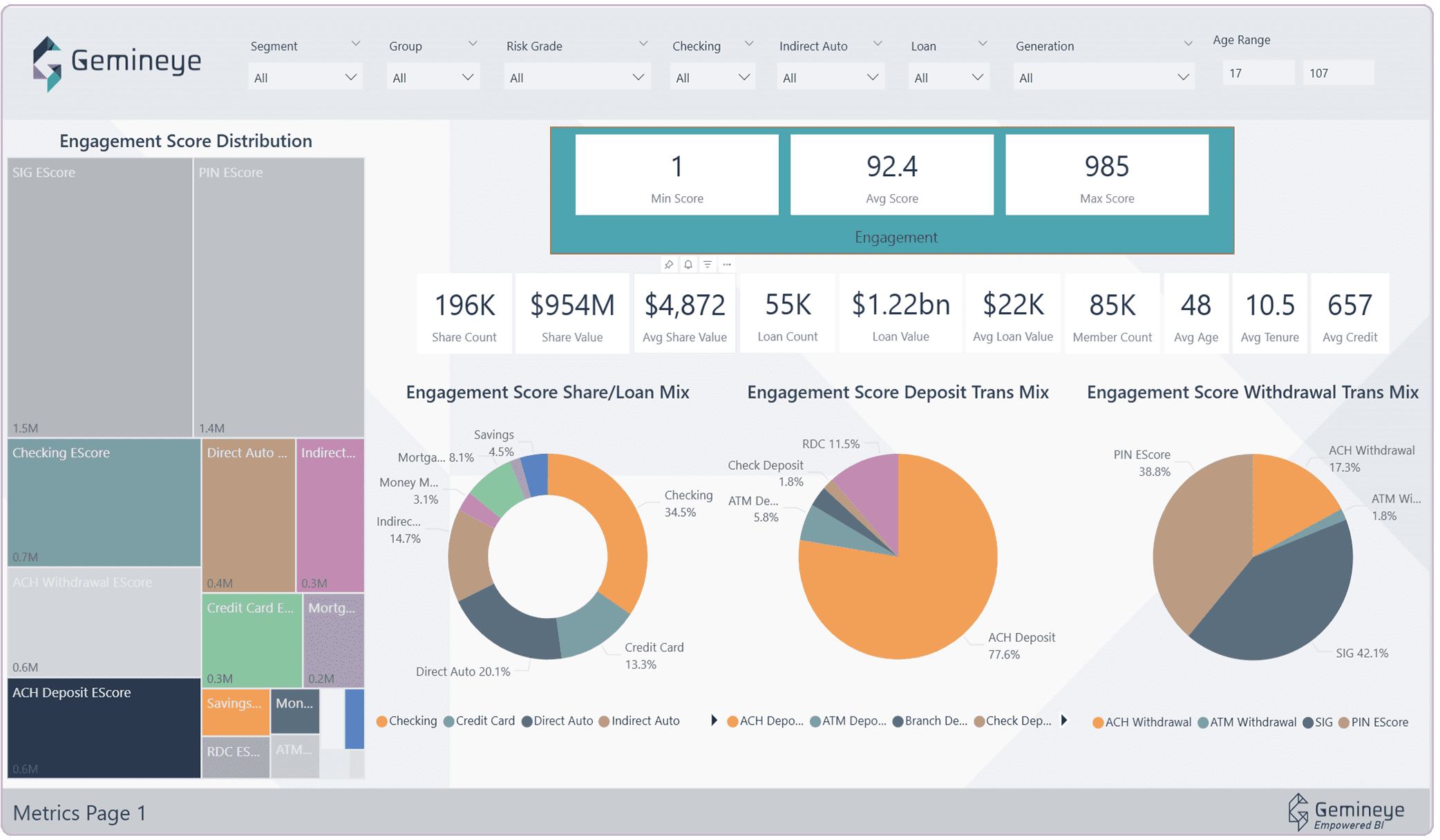
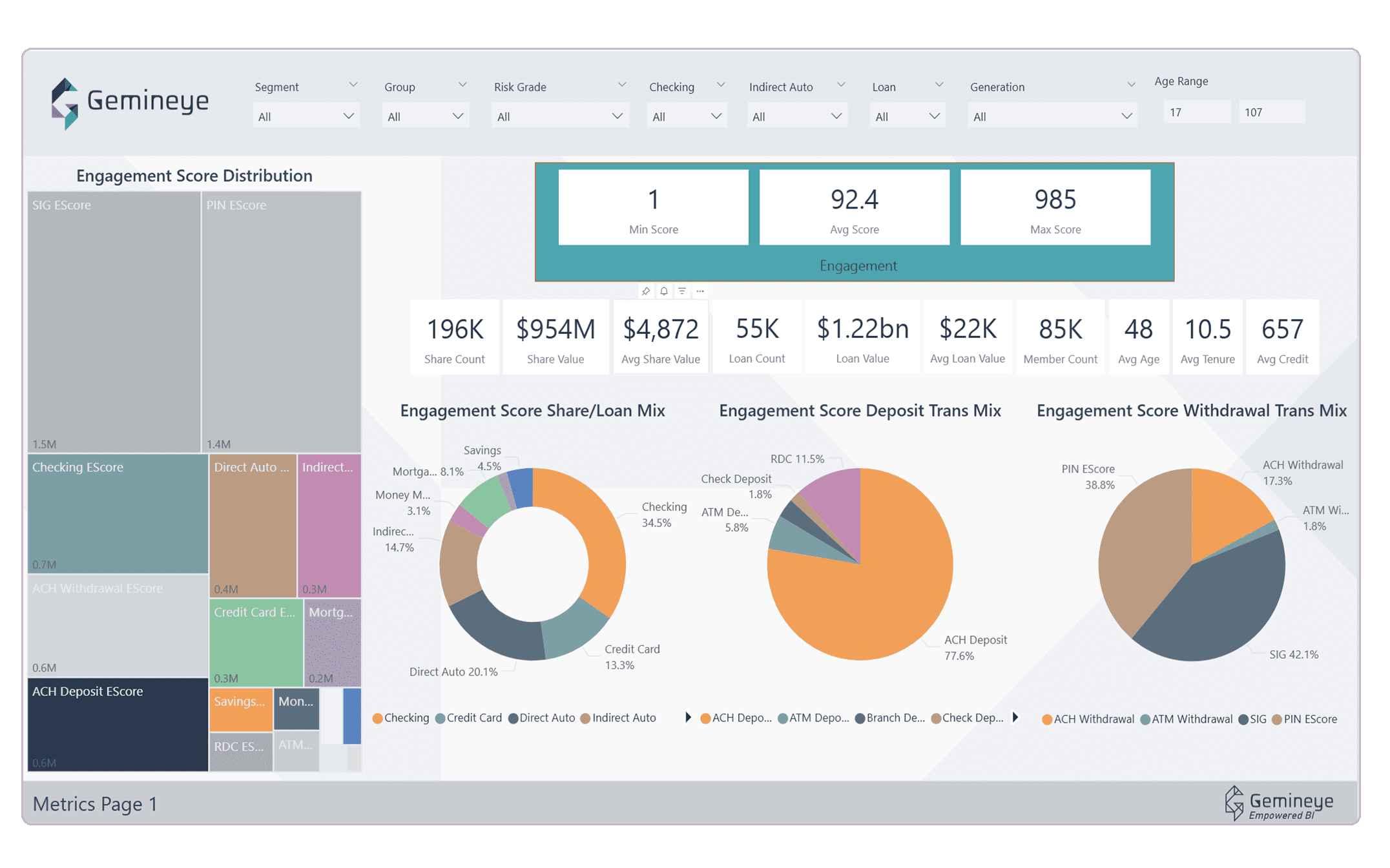
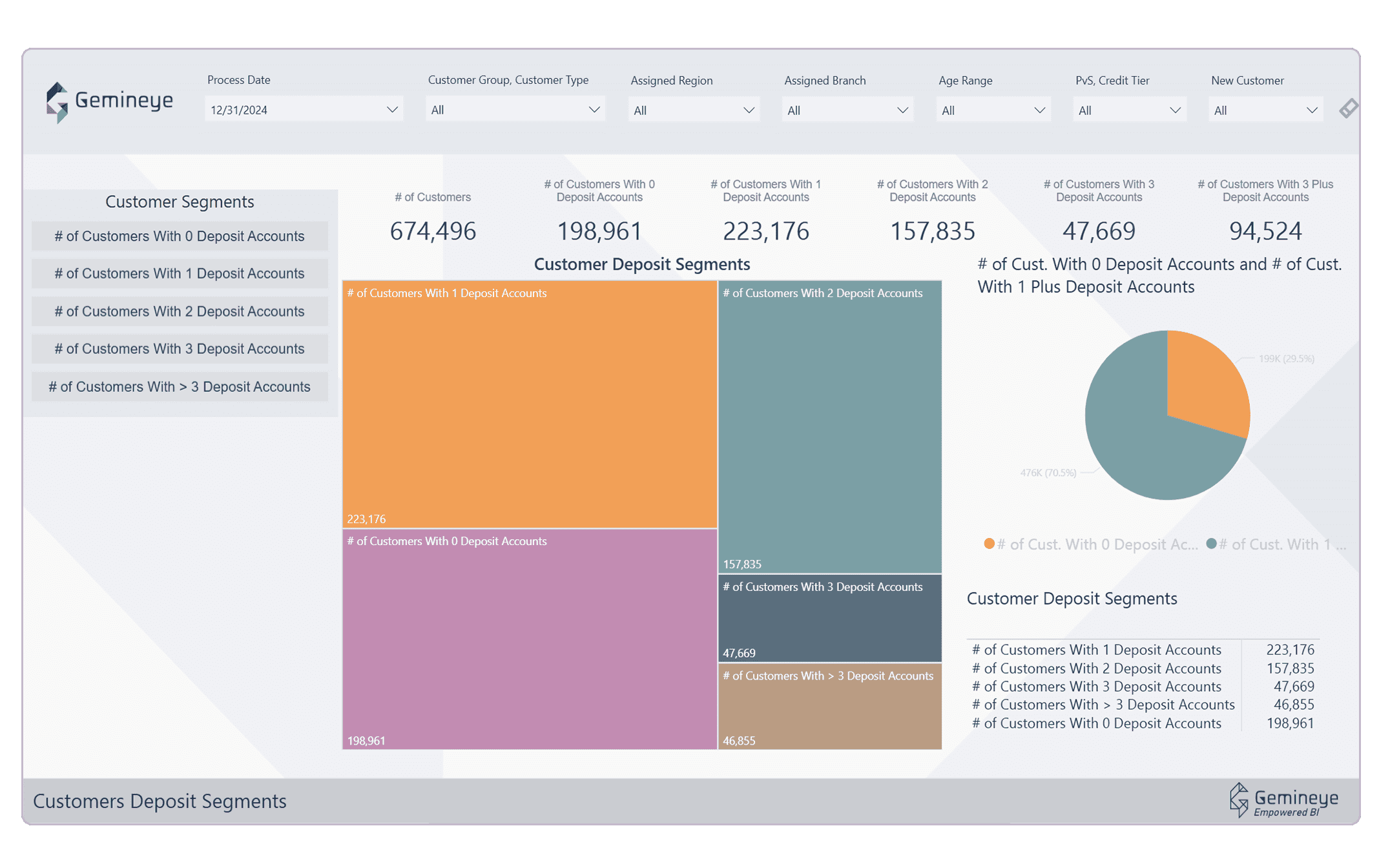
Advanced insights out of the box
With over 250 visualizations available out of the box, day one of Gemineye gives your team – technical and non-technical alike – an immense number of reports and dashboards to consume.























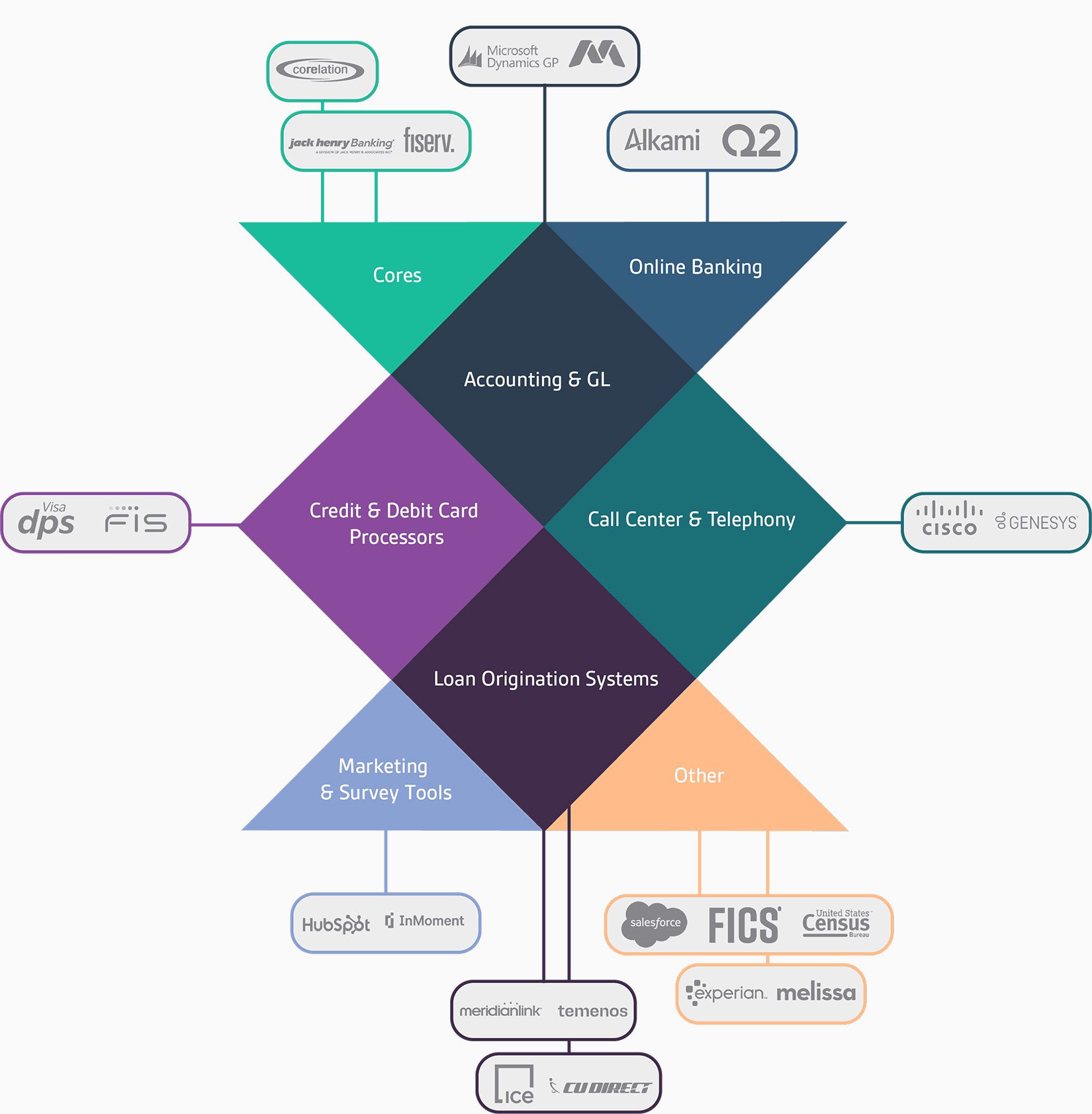
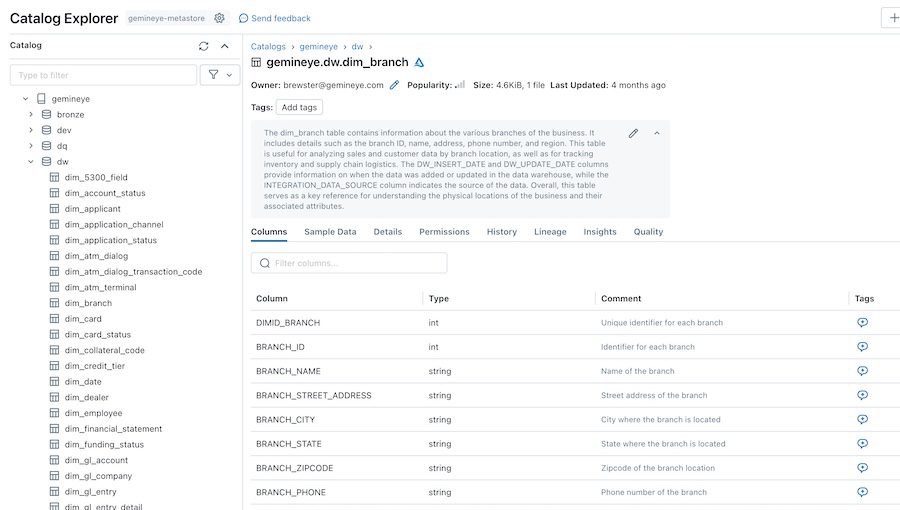
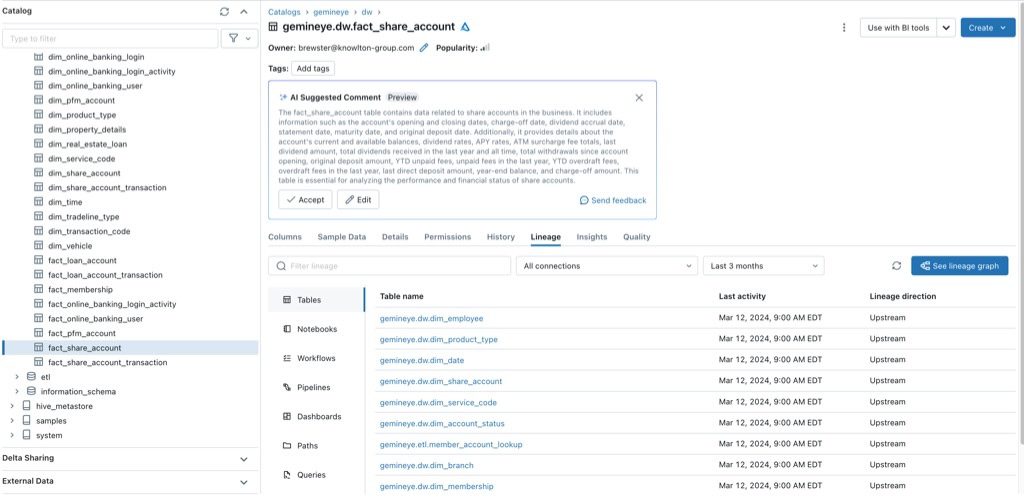



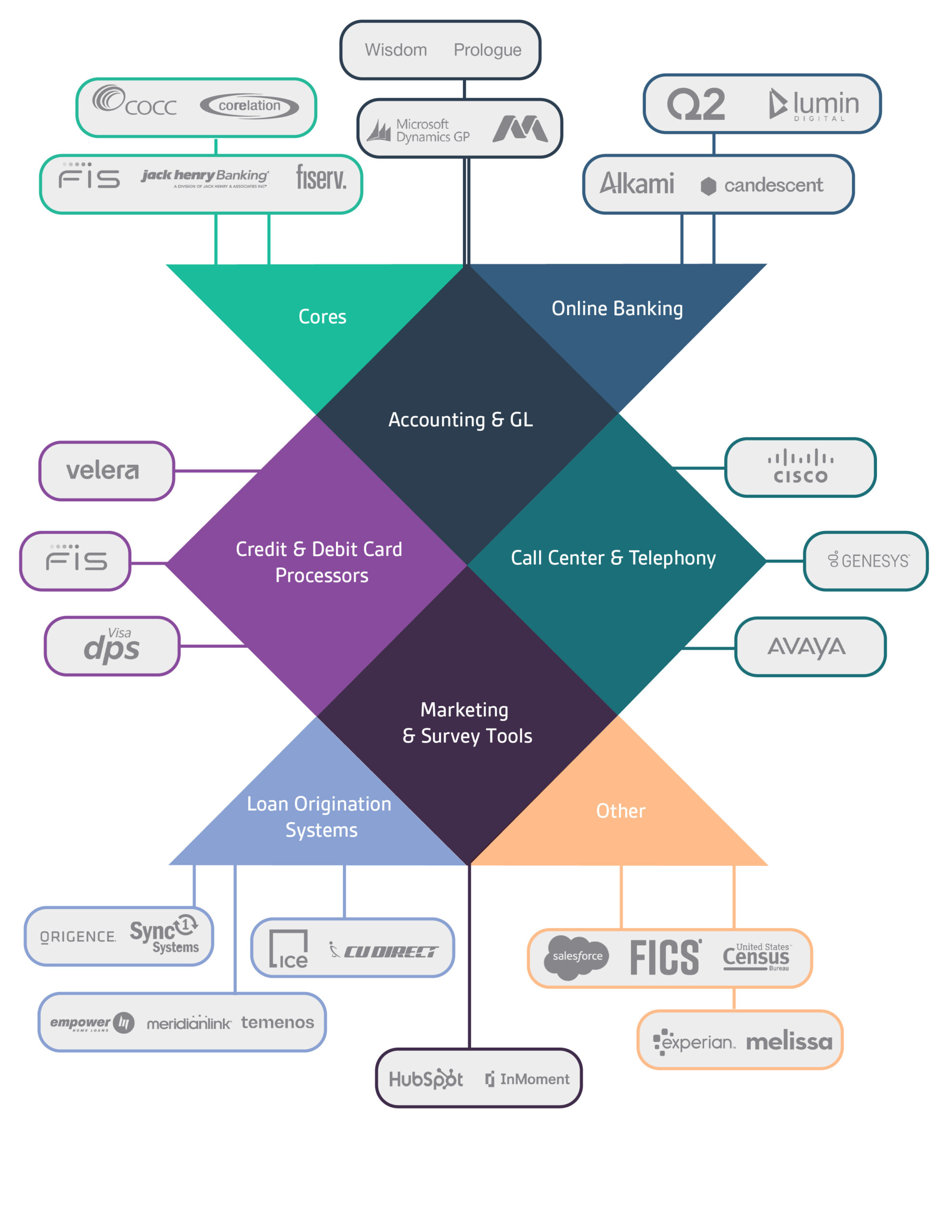




Ask three departments at a credit union or community bank how many active members or customers the institution has, and you may get three different answers. Not because anyone is wrong, but because each department pulls from a different system, defines the term a little differently, and maintains its own version of the numbers. This is the daily reality of operating without a single source of truth, and it quietly undermines confidence in every report, every decision, and every strategic conversation the institution has. A single source of truth is the fix, but it is often misunderstood as simply having one big database. It is more than that, and building one takes more than technology. Understanding what a single source of truth actually is, and what it takes to build, is the first step toward an institution where everyone finally works from the same trusted numbers. What a Single Source of Truth Really Means for a Financial Institution A single source of truth is not one giant system that replaces everything else. It is a unified, trusted layer where data from all of the institution’s systems is brought together, reconciled, and made consistent, so that any question has one authoritative answer regardless of who asks it or which department they sit in. The core keeps running the core. The loan origination system keeps originating loans. The single source of truth sits above them, harmonizing what they each contain. The defining feature is trust. In an institution with a genuine single source of truth, when a number appears in a report, nobody has to ask whose version it is or whether it reconciles with another department’s figures. The number is the number. That reliability is what separates a real single source of truth from a data warehouse that simply piles everything into one place without resolving the contradictions between sources. Why Scattered Systems Make One Trusted Answer Impossible The reason most institutions lack a single source of truth is structural. Their data is scattered across the core, digital banking, loan origination, the CRM, and third-party services, each with its own identifiers, formats, and definitions. As America’s Credit Unions has emphasized, succeeding in this environment is not about collecting more data, but about collecting the right data, interpreting it effectively, and using it to make smarter decisions. That is difficult when the same member or customer appears under different identifiers in different systems and no layer exists to connect them. Without that connecting layer, every attempt to answer an institution-wide question becomes a manual reconciliation project. Someone pulls from each system, tries to match records, resolves the discrepancies by hand, and produces a number that is already going stale by the time it is done. The next person who needs the same answer starts over, often arriving at a slightly different figure. Multiplied across an institution, this is why one question yields many answers, and why none of them fully earns trust. The Building Blocks of a Single Source of Truth Building a single source of truth rests on three things, and only one of them is technology. The first is integration: physically connecting the systems so their data can flow into a common environment. The second is consistent definitions: agreeing, across departments, on what terms like active member, active customer, or funded loan actually mean, and documenting those definitions so they are applied uniformly. The third is governance: maintaining the quality and consistency of the data over time as systems and needs change. The reason many single-source-of-truth efforts fail is that institutions treat it as purely a technology purchase and skip the definitional and governance work. Connecting the systems without agreeing on definitions just produces a faster way to generate conflicting numbers. The technology makes a single source of truth possible, but the shared definitions and ongoing governance are what make it trustworthy. All three have to move together. What Changes Once Everyone Works From the Same Numbers The payoff of a single source of truth extends well beyond cleaner reports. When everyone works from the same trusted data, the entire character of decision-making changes. Meetings stop being debates about whose numbers are right and become discussions about what to do. The data team stops spending its time reconciling and starts spending it analyzing. Leaders make decisions faster because they are not waiting for someone to sort out which figure to believe. This trust also unlocks more advanced work. Predictive analytics, member and customer insights, and profitability analysis all depend on a reliable data foundation. An institution cannot meaningfully predict which members or customers are likely to leave if it cannot even agree on how many it has. A single source of truth is the groundwork that makes every more sophisticated use of data possible, which is why it is worth building before chasing the more advanced capabilities that depend on it. Build Your Single Source of Truth With Gemineye Creating a single source of truth requires connecting your systems, standardizing your definitions, and governing the result over time, all at once. Gemineye’s Data Integrations solution is built to deliver exactly that for credit unions and community banks. It connects the core, loan and mortgage origination, digital banking, CRM, and third-party data vendors through more than 75 pre-built integrations, supports consistent and customizable definitions, and provides end-to-end data lineage so you can trust and trace every number. See how Gemineye helps institutions turn scattered systems into one source of truth everyone can rely on.
The Gemineye Team is Attending the Nevada and California Credit Union League 2026 REACH Conference! We’re excited to be attending the REACH Conference this year on November 2nd to 5th 2026, hosted in gorgeous Palm Springs, California. Stop by booth #164 to learn about the breakthrough tools we’ve been developing in ’26, including our brand new contextual AI assistant, called the Gemineye Genie, and our profitability modeling tools. Have questions about the state of analytics and AI in the credit union industry? Visit our booth to have a conversation about your CU’s data journey with Maggie Chopp, Director of Business Development at Gemineye. Explore New Products and Services Learn more about the capabilities of our new lakehouse version as well as Gemineye Genie, different from anything on the market. And if you’d like to see our AI assistant in action (who wouldn’t?), we can show you how powerful and easy it is to use. Book a 1:1 Consultation If you’d like to set up a 1:1 time to talk with the Gemineye team about our business use capabilities or take a technical deep-dive, you can schedule time with us here. Our booth team are experts in data and you’ll be able to talk well beyond the technical depth of the standard booth rep level. 👉 Click here to schedule a 1:1 session with us. Snag Our Legendary Swag Our swag has developed something of a reputation over the past couple years. Stop by our booth to browse our variety of swag, including custom socks, pennants, thermal mugs, and more! Learn More About Gemineye’ Analytics Suite Before You Attend Interested in learning more about Gemineye’s Data Lakehouse and analytics tools before the event? Browse the solutions we provide and teams we help!
Data integration is an easy thing for a CFO to deprioritize. It sounds technical, it lives in the domain of the data team, and unlike a new branch or a marketing campaign, its costs never appear as a line item anyone approved. That is exactly what makes poor integration so expensive. It is a cost the institution pays continuously, in ways that never surface on the financial statements until someone connects them to the numbers a CFO already watches. For a data or analytics leader trying to make the case for investment, the challenge is translation: turning a problem you experience daily into terms that register with the person who controls the budget. This is what a CFO needs to understand about what poor data integration is actually costing the institution, expressed in the language of the finance office rather than the data team. Why Poor Integration Is a Cost the Financial Statements Hide The reason these costs go unnoticed is that they are distributed. They do not sit in one budget line. They are spread across staff hours, delayed decisions, and errors that get quietly corrected, none of which is labeled as a cost of poor integration. Wolters Kluwer describes the underlying mechanism plainly, noting that the typical institution moves data from one system to the next in a linear fashion, which makes it slow and error prone, with the process bogged down by backfilling, checking, and reconciling work that has already been done. That reconciliation labor is a real, recurring expense. It simply never gets named as one. For a CFO, the useful reframe is that the absence of a line item does not mean the absence of a cost. The institution is already paying for poor integration every month. The only question is whether that spending is visible enough to manage. Right now, for most institutions, it is not. How Poor Integration Wastes Your Most Expensive Employees’ Time The most quantifiable cost is labor. When systems do not connect, skilled staff spend hours every week manually pulling data, reconciling figures that do not match, and rebuilding the same reports from scratch. This is work that would not exist if the data were integrated, and it is being done by some of the institution’s more expensive employees, the analysts and finance staff who should be interpreting data rather than assembling it. A CFO can grasp this immediately when it is framed as capacity. Every hour spent on manual data assembly is an hour not spent on analysis that could improve lending, retention, or efficiency. The institution is paying full salary for high-value people to do low-value reconciliation work, indefinitely, because the systems underneath them were never connected. That is a payroll cost hiding inside a data problem. How Disconnected Data Undermines Every Decision Leadership Makes Beyond labor, poor integration carries a decision cost that is harder to quantify but often larger. When data comes from disconnected systems that do not agree, leadership cannot fully trust any single number. Meetings get consumed by debating whose figures are correct rather than deciding what to do. Decisions get delayed while someone goes to reconcile the discrepancy, and some decisions get made on incomplete or inconsistent information because the reconciled version was not available in time. For a CFO, this is the cost that should be most concerning, because it undermines the entire purpose of having data at all. An institution invests in reporting and analytics to make better decisions, but poor integration quietly degrades the quality of the very decisions that investment was meant to improve. The money spent on data tools delivers a fraction of its potential value when the data feeding them cannot be trusted. Why Poor Data Integration Gets More Expensive as Your Institution Grows The final point a CFO needs to understand is that this is not a static cost. It compounds. Every new system the institution adopts, whether a new digital banking platform, a new origination tool, or a new service, adds another disconnected source that must be manually bridged to everything else. Each addition increases the reconciliation burden and the number of places data can disagree. This means that doing nothing is not holding steady. It is choosing a cost that rises every year as the institution grows and adds technology. A CFO evaluating whether to invest in integration should weigh it not against this year’s cost of the status quo, but against the larger and growing cost of continuing to operate without it. Framed that way, integration stops looking like an expense and starts looking like the avoidance of an expanding liability. Bring the Hidden Cost Into View With Gemineye The strongest way to make the cost of poor integration visible is to eliminate it, and to do that with an approach built for how credit unions and community banks actually operate. Gemineye’s Data Integrations solution connects the core system, loan and mortgage origination, digital banking, CRM, and third-party data vendors into one reconciled environment through more than 75 pre-built integrations. That removes the manual reconciliation labor, restores trust in the numbers, and stops the cost from compounding as new systems are added. When your CFO can see what poor integration has been costing, the case for fixing it makes itself. See how Gemineye turns a hidden cost into a solved problem.