
































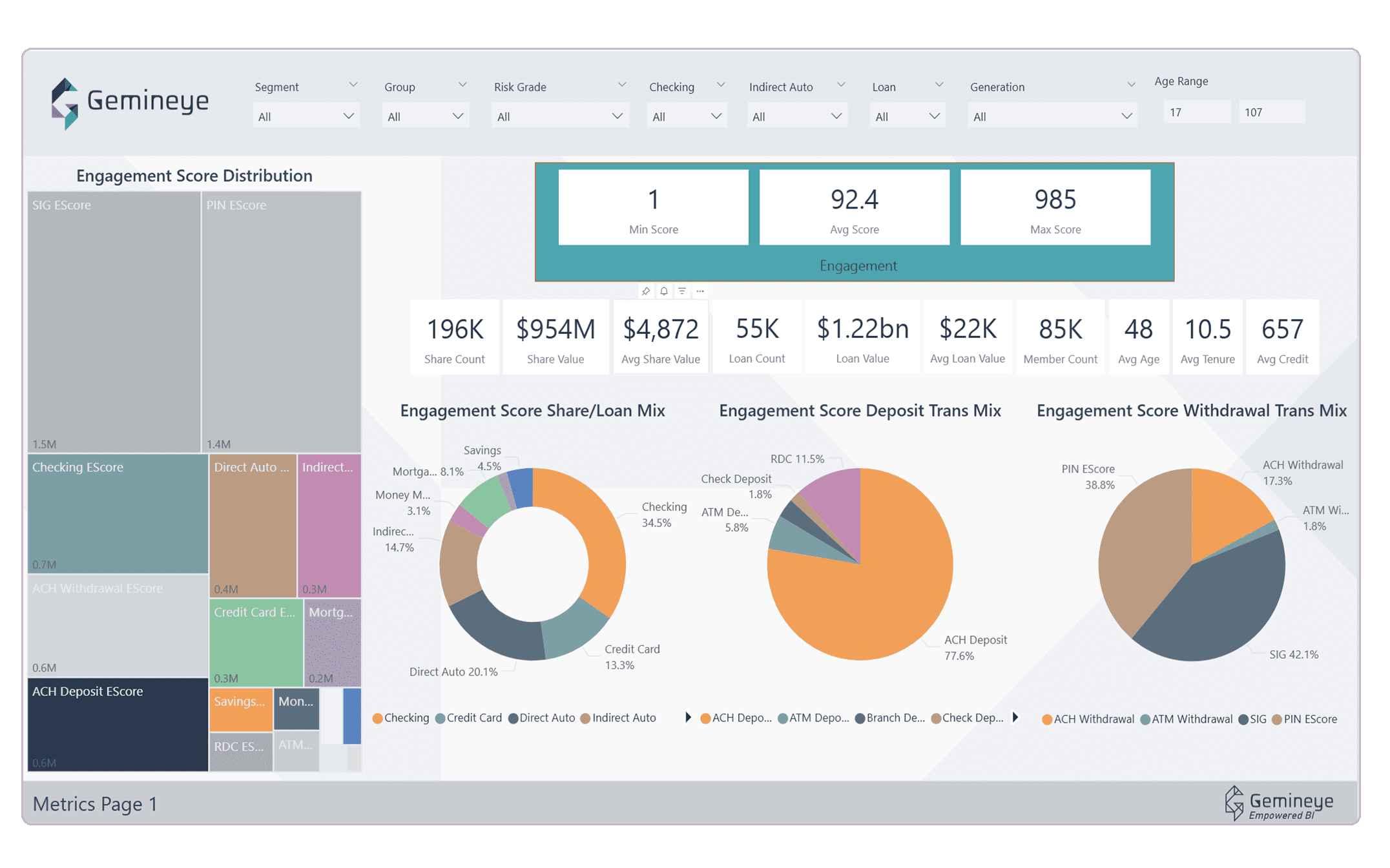




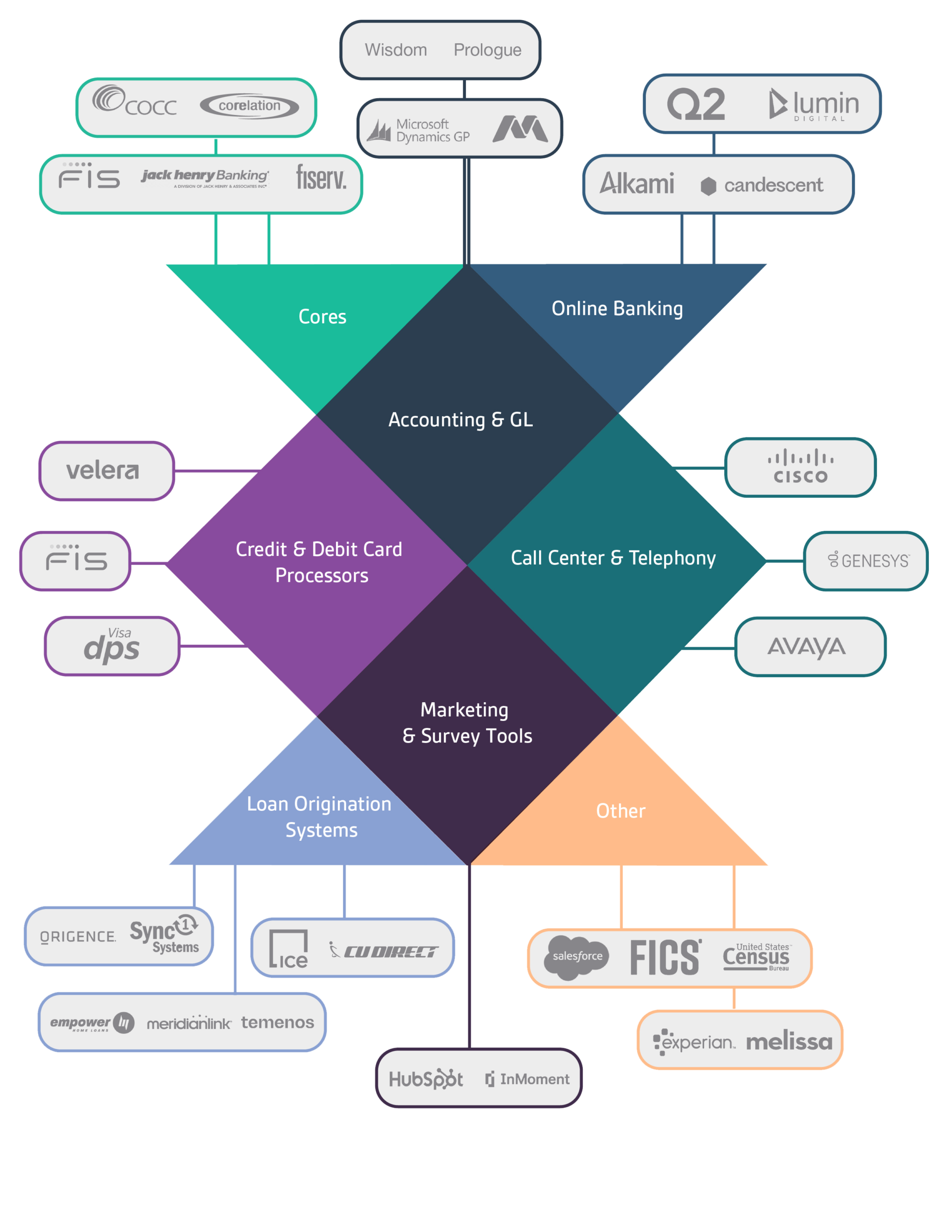

Welcome to our very first edition of “A Day in the Life of a Data Analyst,” featuring the equally talented and down-to-earth Ann Ditlow, Data Analyst at 4Front CU. Ann ...
The team at Gemineye is excited to announce their five-year anniversary with Quorum Federal Credit Union, a $1.1B organization headquartered in Purchase, NY. Quorum is an entirely-online credit union with ...
Gemineye (formerly The Knowlton Group) has partnered with Databricks, the world’s leading data and AI company. Gemineye’s innovative data analytics architecture, called the Gemineye Data Lakehouse, is run entirely ...


Walk into two credit unions of similar size and asset base, and you can often tell within a few minutes which one is further along with its data. It is not about who has the biggest budget or the largest team. It is about a set of habits and choices that separate the institutions treating data as a genuine asset from the ones still treating it as a monthly chore. These differences accumulate quietly, and they are why some institutions steadily outperform peers who look identical on paper. Data maturity is not a product you buy or a milestone you reach once. It is a way of operating, and the habits behind it are learnable at any size. Here is what the most data-mature institutions consistently do differently. Why Data-Mature Financial Institutions Invest in Infrastructure, Not Reports Less mature institutions think about data in terms of outputs: the monthly board report, the quarterly numbers, the dashboard someone requested. Mature institutions think about data in terms of foundation. They invest in the underlying infrastructure that connects their systems and keeps their data clean and consistent, because they understand that every report, every insight, and every decision downstream depends on that foundation being solid. This shift in thinking changes where the effort goes. Instead of repeatedly rebuilding the same reports by hand, mature institutions build the plumbing once and let reports flow from it. Their teams spend less time assembling data and more time interpreting it, which is the work that actually moves the business. How a Data-Driven Culture Replaces Decisions Made on Instinct The clearest marker of data maturity is cultural. In mature institutions, when a strategic question comes up, the reflex is to ask what the data says, not to default to the most senior person’s intuition. This does not mean instinct has no place. It means instinct is informed by evidence rather than substituting for it. Wipfli notes that data can guide decisions as concrete as where demand for financial services is highest, so institutions place the right services in the right locations. That is the kind of question mature institutions answer with evidence rather than guesswork. Building this culture takes more than tools. It requires leaders who ask for data, trust it when they get it, and are willing to change their minds when the evidence points somewhere unexpected. When staff see leadership decide this way, the behavior spreads. How Data-Mature Institutions Extend Access Beyond the Executive Suite In less mature institutions, data access is concentrated. A small number of people can pull reports, and everyone else waits in line. In mature institutions, access is distributed. A branch manager can see their own performance data. A lending officer can check portfolio metrics. A marketer can pull a member or customer segment. The data team enables this access rather than gatekeeping it. This distribution is what turns data from a specialized function into an organizational capability. When everyone who makes decisions has access to the data relevant to those decisions, the quality of decisions rises across the whole institution, not just at the top. It also frees the data team from being a report factory, so their expertise goes toward the harder problems only they can solve. Why Consistent Data Definitions Separate Trusted Numbers From Disputed Ones One quiet but powerful difference is definitional discipline. In mature institutions, an active member or customer means the same thing in every report, every department, and every conversation. Definitions are agreed upon, documented, and maintained. This sounds mundane, but it is the difference between a leadership team that trusts its numbers and one that spends meetings arguing about whose figures are right. Less mature institutions often have the same data defined differently across departments, which quietly undermines every report built on it. Mature institutions treat consistent definitions as a foundational asset, because trust in data is impossible without it, and data cannot drive decisions until people stop second-guessing the inputs. How Data-Mature Financial Institutions Plan for the Long Term, Not the Next Report Perhaps the deepest difference is time horizon. Less mature institutions operate reactively, solving each data request as it arrives and never getting ahead of the work. Mature institutions operate with a roadmap. They know which capabilities they are building toward, they sequence their work so each project makes the next one easier, and they invest in foundations that pay off over years rather than chasing the next report. This long-term orientation is what allows data maturity to build on itself. Each investment strengthens the next, and the distance between a mature institution and a reactive one widens every year. The institutions that start operating this way, even from a modest starting point, are the ones that eventually lead their peers. Move Your Financial Institution Up the Maturity Curve Every one of these habits depends on a data foundation that makes them possible: connected systems, consistent definitions, and broad, governed access. Gemineye’s Data Analytics platform gives credit unions and community banks that foundation, so the behaviors that define data maturity become achievable regardless of team size. See how Gemineye helps institutions operate like the most data-mature players in their field.

Sandwich, Mass (September 21st, 2026) – $1.3B, Memphis-based Orion Financial has partnered with Gemineye to improve their analytics capabilities and obtain insights that could be swiftly leveraged. With 11 branches across western Tennessee and Arkansas, Orion is the largest credit union in the Mid-South. Throughout their 70 year history in Memphis, Orion continues to partner with local organizations to support financial literacy programs, youth education, music and arts organizations across the region. Orion Financial valued speed-to-value in their analytics partner selection, still one of the most challenging areas for analytics providers to accommodate. Gemineye’s pre-built functionality, ongoing EaaS (engineering-as-a-service), and credit union-specific expertise made sense for an organization focused on ROI. “Gemineye brings the credit union expertise, practical capabilities, and flexibility Orion Financial needs to turn data into actionable insights and make more effective decisions for our members, ” says Daren Purnell, CIO at Orion Financial. “Orion Financial is a driven and highly-focused organization,” says Maggie Chopp, Director of Business Development at Gemineye. “Their commitment to improving their analytics structure and developing meaningful insights is exciting to be a part of. Our flexible and best-in-breed data lakehouse will be a great fit for their needs.” About Orion Financial Founded in 1957 in Memphis, Orion Financial is the largest credit union in the Mid-South, serving 70,000 members with over $1.2 billion in assets. Orion Financial is a lifelong partner supporting customers toward financial independence, security, and growth with banking options in consumer and small business, as well as commercial real estate lending. As a member-owned financial institution, Orion Financials’ profits are passed along to members through higher deposit rates, lower loan rates, and affordable financial services that help pave the way to financial freedom. Bank anytime, anywhere on our website or our banking app. Orion Financial is an equal housing lender and insured by the NCUA. See Gemineye’s Data Lakehouse in Action Interested in learning how the Gemineye Data Lakehouse can support your member and community needs like Orion Financial? Schedule a personalized discovery call to see how our platform can transform how your institution’s data program.

Most analytics roadmaps are written as if the data team executing them is large, well-funded, and fully staffed. For the typical data team at a credit union or community bank, that is not the reality. The reality is two to four people, a backlog that never empties, and a list of requests that would keep a team three times the size busy. The roadmaps written for big enterprises do not fit, and trying to follow them tends to produce frustration rather than progress. A lean team can still build a real roadmap. It just has to be a different kind of roadmap: one built around sequencing, realistic scope, and the deliberate accumulation of capability over time. The goal is not to do everything. It is to do the right things in the right order, so that each step makes the next one easier. Why a Small Data Team Needs a Roadmap More, Not Less It is tempting to think roadmaps are a luxury for teams with spare capacity. The opposite is true. When resources are scarce, the cost of working on the wrong thing is higher, because there is no slack to absorb the mistake. A roadmap is how a small team protects its limited time from being consumed by whatever request shouted loudest this week. The need is widespread: recent industry research found that while 67 percent of institutions are implementing AI, only 16 percent have an enterprise-wide roadmap to guide it, and 60 percent say talent shortages could impede their strategic priorities. The ambition is nearly universal. The plan to get there, and the people to execute it, often are not. For a two-person team, the roadmap is also a communication tool. It gives leadership a clear view of what is being worked on and why, which reduces the steady pressure of ad hoc requests and helps executives understand that a deliberate sequence is underway rather than a team simply reacting to whatever comes in. The Questions That Turn a Backlog Into a Strategic Plan The most common mistake a lean team makes is starting with tools. A new platform, a new dashboard product, a new visualization layer, chosen before anyone has defined what questions the institution actually needs answered. This gets the order backward and almost always wastes scarce resources. A better starting point is a focused list of the business questions that matter most. Which members or customers are most likely to leave? Where is loan portfolio risk concentrating? Which branches are over or under their service capacity? Each of these is a question with a clear owner who cares about the answer, and each maps to a specific analytics deliverable. Building the roadmap from the questions ensures every item on it has a defined purpose and a stakeholder waiting for the result, which is exactly what a resource-constrained team needs to justify its time. How Small Data Teams Get Faster With Every Project Once the questions are defined, the sequencing principle for a small team is not to start with the most ambitious project. It is to start with the work that delivers visible impact quickly and builds reusable foundations for what comes next. A first project that cleans and connects a key data source does double duty: it answers an immediate question and it makes every future project that touches that data faster. This is the core advantage a small team can engineer for itself. By sequencing so that early work creates reusable assets, like connected data sources, consistent definitions, and a governed environment, the team gets faster with each project rather than starting from scratch every time. The roadmap compounds. What feels slow at the start accelerates, because the foundation laid early keeps paying off. Keep Your Roadmap Alive When the Requests Keep Coming The single greatest threat to a small team’s roadmap is the backlog. Every week brings new requests, each reasonable on its own, and each one is a small pull away from the planned work. Without a deliberate defense, the roadmap quietly dissolves into reactive request-fulfillment, and the team ends the year having stayed busy without having advanced. Protecting the roadmap does not mean refusing requests. It means having a structure that absorbs routine requests without derailing planned work. The most effective structure is self-service: when stakeholders can answer their own routine questions without going through the data team, the volume of interruptions drops, and the roadmap survives. Building that self-service capability is itself a high-value roadmap item, because it directly buys back the team’s time. From a Two-Person Team to a Mature Analytics Program A lean team cannot stand up a complete, mature analytics function in a single push. What it can do is build capability in layers, where each layer is achievable with current resources and sets up the next. The first layer might be connecting core data sources and establishing trustworthy definitions. The next might be self-service reporting for the most common requests. After that, predictive work becomes possible, because the foundation to support it finally exists. This layered approach is what makes an ambitious end state reachable for a small team. Nobody gets from a two-person reactive function to a mature analytics program in one leap. But a roadmap that sequences achievable layers, each building on the last, gets there over time without ever requiring the team to take on more than it can handle at once. Give Your Lean Team a Foundation That Scales The roadmaps that work for small data teams all depend on a foundation that does the heavy lifting of connecting and governing data, so the team’s limited time goes toward analysis rather than maintenance. Gemineye’s Data Analytics platform is built for exactly this. It connects more than 75 data sources into one governed environment, maintains consistent definitions, and enables self-service access, so a two-person team can build reusable foundations early and accelerate with every project that follows. See how Gemineye helps lean data teams at credit unions and community banks build ...